



South Africans experienced challenges paying with their cards and using ATMs following the severe storms that recently wreaked havoc in parts of the country.
According to Wireless Access Providers Association (WAPA) executive Paul Colmer, the problems were widespread and may possibly be related to a data centre peering issue.
“What we know from research after the reports, we certainly noticed increased latencies on undersea cable routes, which is not directly affecting the banking systems,” he told Cape Talk.
“Within Cape Town, obviously, you’ve had severe weather and flooding that damages local infrastructure, power, everything like that. Tower and backup battery supplies can only last so long.”
However, he explained the weather likely compounded deeper problems and was not primarily to blame for the challenges.
“The problem could be between fibre providers. There could be a national long-distance fibre route that has been damaged,” Colmer said.
“It’s certainly looking like a data centre peering problem where the providers are having issues with actually routing to each other.”
Colmer said the issues did not directly impact banks’ systems, but said that point-of-sale devices and ATMs were particularly vulnerable.
He explained that many point-of-sale terminals depended on cellular networks, their signal strength, and latency. The challenges could be explained by the storm-inflicted infrastructure damage.
Many ATMs depended on fibre, and in more remote areas, satellite connectivity, to maintain continuous communication.
Colmer said that the ATMs connected via satellite services could experience disruptions during heavy storms due to rain fade.
“It would indicate to me, the blanket and the widespread thing, it’s less weather-related in Cape Town because we’ve been experiencing it elsewhere,” he said.
“It’s very much sounding like a routing problem in the main data centres where all the providers interlink with each other and all the other businesses, whether financial or not.”
Colmer said South African telecoms networks had some connectivity resilience, but alternative routes were becoming congested.
“This is a huge problem,” he said. “It’s very expensive to build redundant infrastructure on different routes,” adding these costs would be passed on to end users.
National disaster declared after floods and snowfall
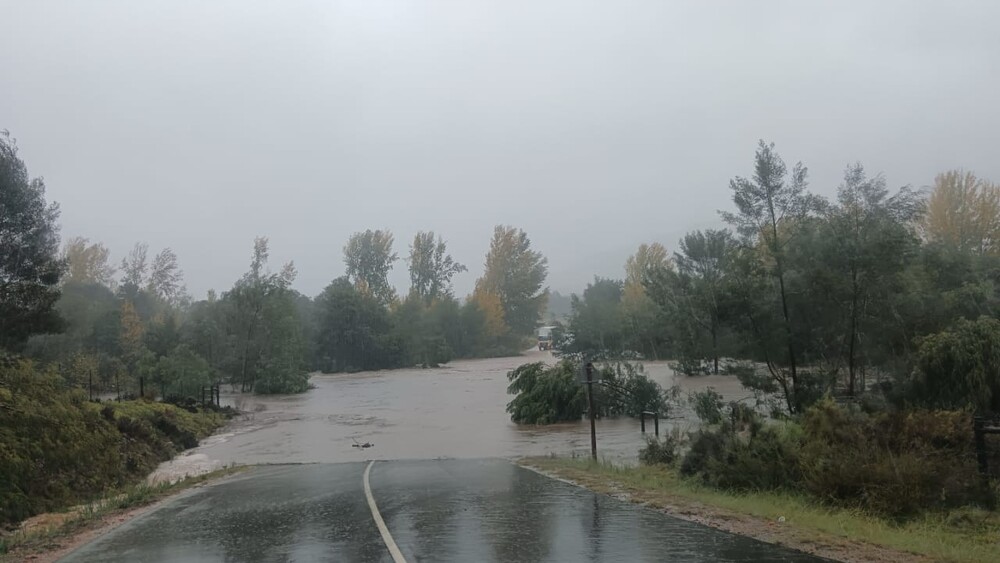
On 11 May 2026, National Disaster Management Centre (NDMC) head Elias Sithole declared a national disaster in South Africa following severe weather events in several provinces earlier that month.
Harsh weather conditions have battered the country since 4 May. This included heavy rainfall and flooding, thunderstorms, high winds, and snowfall.
The affected provinces included the Western Cape, Eastern Cape, North West, Free State, the Northern Cape, and Mpumalanga, where residents were displaced, and several people lost their lives.
NDMC spokesperson Thabo Khupari said the declaration assigned primary responsibility to the Executive to refocus resources for disaster relief and infrastructure repairs.
“It also empowers other organs of state to assist in responding to the disaster,” Khupari said. “Mostly, the impact we have seen has been on infrastructure, like our roads.”
“Most of our dams are overflowing. We activated contingency arrangements and evacuated those who were at risk, saving lives.”
Ali Sablay from Gift of the Givers said the organisation was active in four of the six provinces where a state of disaster was declared.
“The first one was the Northern Cape, where there were many families affected near Upington, at the Dawid Kruiper Municipality,” he said.
Also in the Northern Cape, many towns in Kuruman were inaccessible, with 82 areas completely isolated due to the weather. The only way in and out was via helicopter.
He said their teams were also active in the Nelson Mandela Bay metro, near Gqeberha in the Eastern Cape.
Sablay applauded provincial governments for providing “great support” to Gift of the Givers’ teams, including providing vehicles, and highlighted Nelson Mandela Bay’s contributions.
“All credit is due to the Nelson Mandela Bay metro disaster management teams, who gave us extra 4x4s and additional vehicles to move into those areas where the trucks could not go in,” Sablay said.